How to Measure Social Media ROI
Stop guessing whether social media is working. This guide gives you the exact formulas, real-dollar examples, and metric frameworks to prove the value of every post you publish.
No credit card · 7-day free trial · From $19/mo

What Is Social Media ROI?
Social media ROI (return on investment) measures the financial value generated by your social media activities relative to what you spend on them. It answers the question every business owner and marketing manager asks: is the time, money, and effort I put into social media actually paying off? Unlike vanity metrics such as follower count, ROI connects your social media activity directly to business outcomes like revenue, leads, and customer acquisition. Understanding your ROI is the difference between running a social media program based on intuition and running one based on evidence. Every dollar and every hour you invest should be traceable to a measurable result, whether that result is a direct sale, a qualified lead, or a reduction in customer acquisition cost that strengthens your bottom line over time.
According to Sprout Social's research, only 29% of marketers can confidently measure the ROI of their social media efforts. The remaining 71% either lack the right tracking infrastructure or are measuring the wrong metrics entirely. This guide will put you in that confident 29%.
Which Metrics Actually Matter?
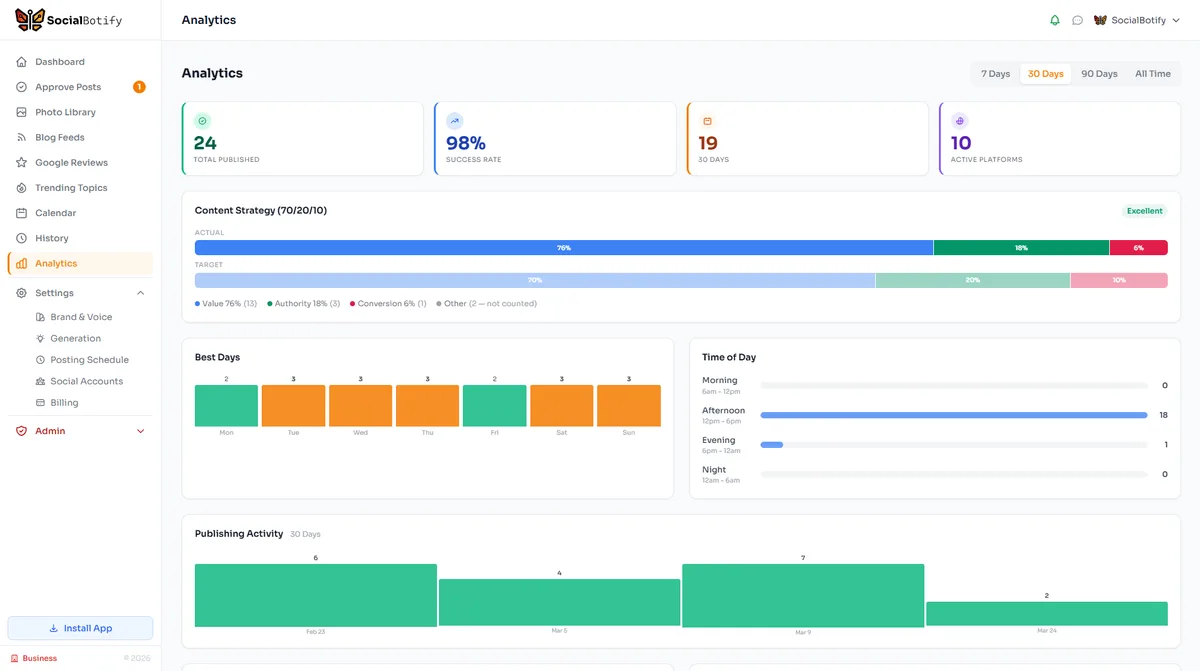
Not all social media metrics are created equal. Follower count and impressions look impressive in reports but tell you almost nothing about business impact. The metrics that actually connect to ROI fall into four categories: engagement rate, click-through rate, conversion rate, and cost per acquisition. Each metric tells a different part of the story, and together they form a complete picture of how social media contributes to your revenue. Engagement rate reveals whether your content resonates with the right audience. Click-through rate shows whether that resonance translates into action. Conversion rate measures how many of those actions become customers or leads. And cost per acquisition ties everything back to the financial question at the heart of ROI: how much does it cost you to acquire each new customer through social media channels?
HubSpot's State of Marketing report found that businesses tracking at least three ROI-related metrics are 1.6x more likely to receive increased social media budgets from leadership. Measurement is not just about proving value -- it is about securing resources to grow.
Engagement Rate
Measures total interactions (likes, comments, shares) divided by reach or followers. A high engagement rate means your content resonates and the algorithm will show it to more people.
Click-Through Rate (CTR)
Measures how often people click your links compared to how many saw them. A strong CTR means your calls-to-action are working and your audience wants to learn more.
Conversion Rate
Tracks how many visitors from social media take a desired action -- signing up, purchasing, or requesting a demo. This is the metric that ties social activity directly to revenue.
Cost Per Acquisition (CPA)
Shows how much you spend to acquire each customer through social media. Lower CPA means higher ROI. This is the metric your CFO cares about most.
How to Calculate Social Media ROI
Calculating social media ROI requires two things: knowing your total costs and tracking the revenue or value generated. Costs include tool subscriptions, ad spend, content creation time valued at your hourly rate, and any agency or freelancer fees. Revenue tracking requires UTM parameters on every link you share, conversion goals set up in your analytics platform, and a system for attributing sales back to social media touchpoints. The most common mistake businesses make is forgetting to include labor costs on the expense side. If you spend eight hours per week managing social media and your time is worth fifty dollars per hour, that is sixteen hundred dollars per month in labor alone before you add tool costs or ad spend. Accurate ROI measurement demands honest accounting of every resource you invest, not just the line items that show up on a credit card statement.
Here are three worked examples showing how ROI calculation works for different scenarios:
What Metrics Matter by Business Type?
The metrics you prioritize should depend on your business model. An e-commerce brand selling products directly online needs different KPIs than a consulting firm that nurtures leads over months before closing a deal. The table below maps the most important ROI metrics to three common business types, helping you focus your measurement efforts on what actually drives revenue for your specific situation. Agencies managing multiple client accounts face a unique challenge: they must demonstrate ROI across diverse industries with different sales cycles and conversion paths, which makes having a standardized measurement framework even more critical for retaining clients and scaling operations effectively.
| Metric | E-Commerce | Service Business | Agency |
|---|---|---|---|
| Primary Goal | Direct sales | Lead generation | Client retention |
| Key ROI Metric | Revenue per click | Cost per lead | Client LTV growth |
| Conversion Metric | Purchase rate | Demo/call bookings | Upsell rate |
| Engagement Focus | Shares & saves | Comments & DMs | Cross-platform reach |
| Tracking Method | UTM + pixel | CRM attribution | Multi-touch model |
| Typical CPA | $15 -- $50 | $50 -- $200 | $200 -- $500 |
Whether you run an e-commerce store or a service business, having a documented content strategy ensures your social media efforts align with the metrics that matter most for your specific business model.
How Does Automation Affect Social Media ROI?
The ROI formula has two sides: revenue and cost. Most businesses focus exclusively on increasing the revenue side, but reducing costs is equally powerful and far more predictable. Social media automation with tools like SocialBotify's AI post generator attacks the cost side directly. When AI handles content creation, platform optimization, and scheduling, you eliminate the single largest expense in most social media programs: human labor hours. A business owner spending eight hours per week writing and scheduling social posts at a fifty-dollar hourly rate is spending sixteen hundred dollars per month on content creation alone. Automating that workflow with SocialBotify reduces it to roughly two hours of review time per week, saving twelve hundred dollars per month in labor costs without reducing content output or quality.
Nielsen research shows that consistent posting frequency is the strongest predictor of social media marketing efficiency. Automation ensures you never miss a posting day, maintaining the consistency that algorithms reward with increased organic reach. Higher reach at lower cost is the definition of improved ROI.
Lower content creation cost
AI generates posts in seconds, reducing weekly labor from 8+ hours to under 2 hours of review time.
Consistent posting frequency
Automation eliminates gaps in your posting schedule, keeping algorithms engaged and reach growing.
Multi-platform reach without extra effort
SocialBotify adapts content for 10 platforms simultaneously -- same message, optimized for each audience.
Better content quality at scale
AI trained on high-performing content patterns produces posts that drive higher engagement rates than rushed manual content.
Small businesses benefit the most from automation because they typically have the least capacity for manual social media management. Our guide on social media automation for small businesses covers the complete setup process.
Frequently Asked Questions
What is a good ROI for social media marketing?
A good social media ROI varies by industry, but most benchmarks consider anything above 100% (meaning you earn back more than double your investment) to be strong. For e-commerce businesses, a 3:1 return (200% ROI) is considered healthy. Service businesses often see lower direct ROI but higher lifetime value per client acquired through social. The key is to measure against your own baseline and improve over time rather than chasing a universal number.
How often should I measure social media ROI?
You should review engagement and traffic metrics weekly, calculate conversion-based ROI monthly, and perform a comprehensive ROI analysis quarterly. Weekly checks help you spot underperforming content early. Monthly calculations reveal trends in cost per acquisition and conversion rates. Quarterly reviews give you enough data to make strategic decisions about budget allocation and platform focus.
Can you measure ROI for organic social media posts?
Yes, organic social media ROI is measurable, though it requires tracking both direct and indirect value. Direct value includes website traffic, leads, and sales attributed to organic posts through UTM parameters. Indirect value includes brand awareness (measured via reach and impressions), audience growth rate, and engagement that builds trust over time. Tools like SocialBotify help by automating content creation, which dramatically reduces the cost side of the ROI equation while maintaining consistent output.
Ready to Improve Your Social Media ROI?
SocialBotify automates content creation, scheduling, and multi-platform publishing -- cutting your costs while keeping your output consistent. Start your free trial and see the ROI difference.
No credit card required · 7-day free trial · Plans from $19/mo