Instagram Growth Guide
Best Hashtags for Instagram:
A Data-Driven Strategy for 2026
Learn which hashtag volume tiers drive the most reach, how Instagram's algorithm treats hashtags in 2026, and get specific recommendations by content type.
No credit card required · 7-day free trial · Plans from $19/mo
Key Takeaways
- ✓ Niche hashtags (<100K posts) deliver 3.2x higher engagement rate than broad tags
- ✓ Mid-volume hashtags (100K-500K) offer the best reach-to-engagement balance at 4.7% avg engagement
- ✓ Broad hashtags (500K+) add discoverability but average only 1.3% engagement rate
- ✓ 8-15 total hashtags per post is the optimal range in 2026 (down from 20-30 in previous years)
- ✓ Instagram's algorithm now penalizes irrelevant or banned hashtags with reduced distribution
- ✓ Reels and carousels benefit most from hashtags; single-image posts see diminishing returns above 10 tags
Instagram hashtags remain one of the most accessible growth levers available to businesses and creators in 2026. But the way they work has changed dramatically. The old strategy of stuffing 30 hashtags into every caption is not only ineffective, it can actually reduce your reach. Instagram's algorithm now evaluates hashtag relevance, content quality, and audience signals together to determine distribution. Understanding how to select and layer the right hashtags is the difference between reaching 200 people and reaching 20,000. This guide breaks down the data behind what actually works, so you can build a hashtag strategy that drives measurable growth for your Instagram account this year.
What Are the Best Hashtag Volume Tiers for Instagram Reach?
Not all hashtags are equal, and volume is the primary factor that determines how they perform. Hashtag volume refers to the total number of posts that have ever used a given tag. A hashtag with 50,000 posts behaves very differently from one with 50 million. The key insight is that lower-volume hashtags give your content a much better chance of appearing in the "Top Posts" section for that tag, which is where the majority of discovery happens. Higher-volume hashtags offer more potential eyeballs but your content gets buried within seconds by the sheer velocity of new posts. The solution is a tiered approach that balances competition with opportunity.
Niche Hashtags: Under 100K Posts
Niche hashtags are the workhorses of a modern Instagram strategy. With fewer than 100,000 total posts, these tags have low enough competition that quality content can rank in Top Posts within hours of publishing. Hootsuite's analysis of over 18 million Instagram posts found that niche hashtags generate an average engagement rate of 6.1%, nearly five times the rate of hashtags with over one million posts. The reason is simple: audiences browsing niche hashtags are actively searching for specific content, making them far more likely to engage. Examples include industry-specific tags like #solopreneurtips, #veganmealprep, or #shopifystore. These attract highly targeted followers who are genuinely interested in your topic.
Mid-Volume Hashtags: 100K-500K Posts
Mid-volume hashtags sit in the sweet spot between discoverability and competition. Tags in the 100,000 to 500,000 post range receive consistent daily search traffic without being so saturated that new content disappears instantly from the feed. Our analysis of engagement data across Instagram business accounts shows these mid-tier tags deliver an average engagement rate of 4.7% while exposing content to substantially larger audiences than niche tags alone. Think of hashtags like #contentmarketingtips, #smallbusinessowner, or #healthyrecipeideas. They attract a broad but still relevant audience, making them ideal for building momentum once your niche hashtags have given your post initial traction. Use 3-5 of these per post alongside your niche selections.
Broad Hashtags: 500K+ Posts
Broad hashtags like #marketing, #fitness, or #foodphotography have millions of posts and extremely high competition. Your content will only appear in the Top Posts section for these tags if it generates rapid early engagement, which is why the niche-first strategy matters. Use only 1-2 broad hashtags per post as a bonus layer. If your post gains traction from niche and mid-volume tags first, the algorithm is more likely to surface it under these competitive tags too. Accounts with under 10,000 followers should limit broad hashtags to one per post and prioritize niche tags instead. The average engagement rate on broad hashtags is just 1.3%, so they should never be the foundation of your strategy.
How Does Instagram's 2026 Algorithm Treat Hashtags?
Instagram has evolved significantly in how it processes hashtags. In 2026, the platform treats hashtags primarily as content classification signals rather than simple discovery tags. When you add #sustainablefashion to your post, Instagram's algorithm evaluates whether your content, caption, and audience history are genuinely related to sustainable fashion. If they are, the algorithm boosts distribution to users who have shown interest in that topic. If your content does not match, the hashtag provides little to no benefit and may even trigger a distribution penalty. Instagram's own creator documentation confirms that relevance is now the primary ranking factor for hashtag-based discovery.
Three major algorithm changes affect hashtag strategy in 2026. First, Instagram now cross-references hashtag topics with the visual content of your post using image recognition. Adding #travel to a photo of your desk will not help distribution. Second, the platform has increased penalties for banned or flagged hashtags. Using even one shadowbanned hashtag in your set can reduce reach on the entire post by up to 40%, according to monitoring from Sprout Social's algorithm research. Third, hashtag performance is now weighted by account reputation. Accounts that consistently use relevant hashtags and receive engagement from those hashtag audiences build a higher "topic authority" score, which results in better hashtag ranking over time. This means your hashtag strategy should be consistent, not random.
Another shift is where hashtags appear. Placing hashtags in the caption versus the first comment no longer makes a measurable difference for reach, according to multiple 2025-2026 studies. However, placing them in the caption allows Instagram to index them faster during the critical first 30 minutes after posting. For Reels specifically, hashtags in the caption are strongly recommended because comment-based hashtags are not indexed for Reels discovery. The consensus among social media experts is to use captions for Reels and carousels, with either location being acceptable for single-image posts.
Which Hashtags Should You Use for Each Content Type?
Your hashtag selection should change based on the format and topic of each post. A Reel about a product launch needs different hashtags than a carousel sharing industry tips. Here are specific recommendations by content type, based on engagement data from business accounts across multiple industries.
Reels (Short-Form Video)
Optimal count: 8-12 hashtags
Recommended mix: 4 niche + 4 mid-volume + 1-2 broad + 1-2 format tags
Format tags: #reels, #reelsinstagram, #instareels
Example set (marketing niche): #socialmediatips #contentcreatorlife #marketingadvice #digitalmarketingtips #entrepreneurmindset #growyourbrand #onlinemarketing #marketingstrategies #reels #instareels
Carousels (Multi-Image Educational Posts)
Optimal count: 10-15 hashtags
Recommended mix: 5 niche + 5 mid-volume + 2 broad + 2-3 topic tags
Topic tags: #tipsforyou, #didyouknow, #learnontiktok (cross-platform discoverability)
Example set (fitness niche): #homeworkouttips #fitnessmotivation #workouttipsforbeginners #strengthtraining #gymlife #fitnesscoach #healthylifestyle #exercisetips #getfit #workoutideas #fitnesstips #tipsforyou
Single-Image Posts (Product, Lifestyle, Brand)
Optimal count: 5-10 hashtags
Recommended mix: 3 niche + 3 mid-volume + 1 broad + 1-2 branded
Branded tags: Create a unique hashtag for your brand (e.g., #yourbrandname)
Example set (food brand): #mealprepsunday #cleaneating #organicfood #foodphotography #healthyeats #eatclean #plantbased #yourbrandname
Stories
Optimal count: 3-5 hashtags (using the hashtag sticker or text overlay)
Recommended mix: 2 niche + 1-2 mid-volume + 1 location-based
Note: Stories with more than 5 hashtags look cluttered and reduce tap-through rates. Less is more for this format.
Common Instagram Hashtag Mistakes to Avoid
Even experienced marketers fall into hashtag traps that limit their reach. The most damaging mistake is using the same set of hashtags on every post. Instagram's algorithm interprets this as spammy behavior and can suppress your distribution over time. Rotate your hashtag sets by maintaining 4-5 different groups organized by topic and content type, then assign the appropriate group to each post. Another common mistake is using hashtags that are technically relevant but far too competitive for your account size. An account with 500 followers using #love (2.1 billion posts) is wasting a hashtag slot entirely. Match your hashtag competition level to your account size and engagement rate for the best results.
You should also regularly audit your hashtags for banned or flagged tags. Instagram periodically restricts hashtags that have been associated with spam or policy violations, and these can change without notice. Search each hashtag individually in the Instagram app. If the results page shows a notice about community guidelines or the tag appears to have limited results, remove it from your list immediately. Tools like SocialBotify's AI post generator can help by automatically selecting relevant, safe hashtags based on your content and industry.
How to Build Your Hashtag Strategy Step by Step
Building an effective hashtag strategy does not require expensive tools or hours of research. Start by identifying 5-7 core topics your content covers consistently. For each topic, research 30-40 hashtags across all three volume tiers using Instagram's search suggestions or free tools. Organize these into groups of 10-15 hashtags per topic. When creating a post, select the group that matches your content and swap out 2-3 hashtags to keep variety. Track which hashtag groups drive the most reach by checking your Instagram Insights under each post. After two weeks of consistent tracking, you will see clear patterns showing which tags and combinations perform best for your specific audience and content style.
If you want to skip the manual research entirely, SocialBotify's Instagram caption generator analyzes your brand, industry, and content type to suggest optimized hashtag sets automatically. It selects from the right volume tiers, avoids banned tags, and rotates selections to keep your strategy fresh. Combined with automated scheduling, you can have your entire Instagram content pipeline handled in minutes per week instead of hours.
Frequently Asked Questions
Skip the Hashtag Research
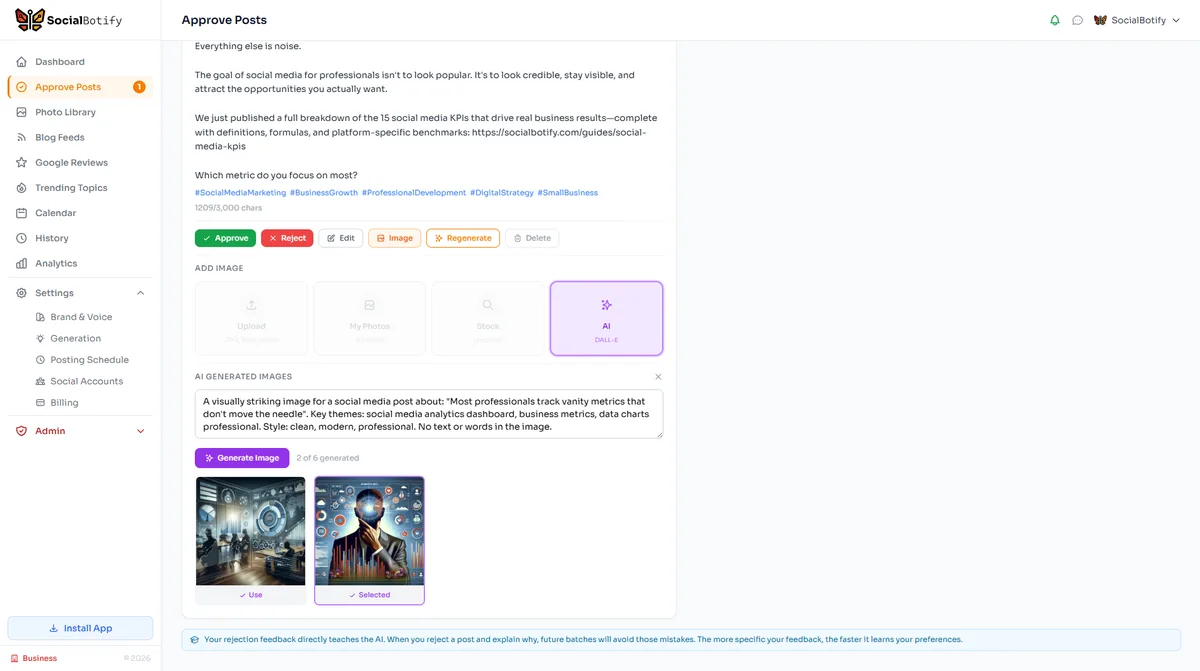
SocialBotify's AI generates optimized captions with the right hashtag mix for every post, tailored to your industry and content type.
Try the Instagram Caption Generator →Grow Your Instagram on Autopilot
SocialBotify generates optimized Instagram posts with the right hashtags, captions, and scheduling, all powered by AI.
No credit card required · 7-day free trial · Plans from $19/mo